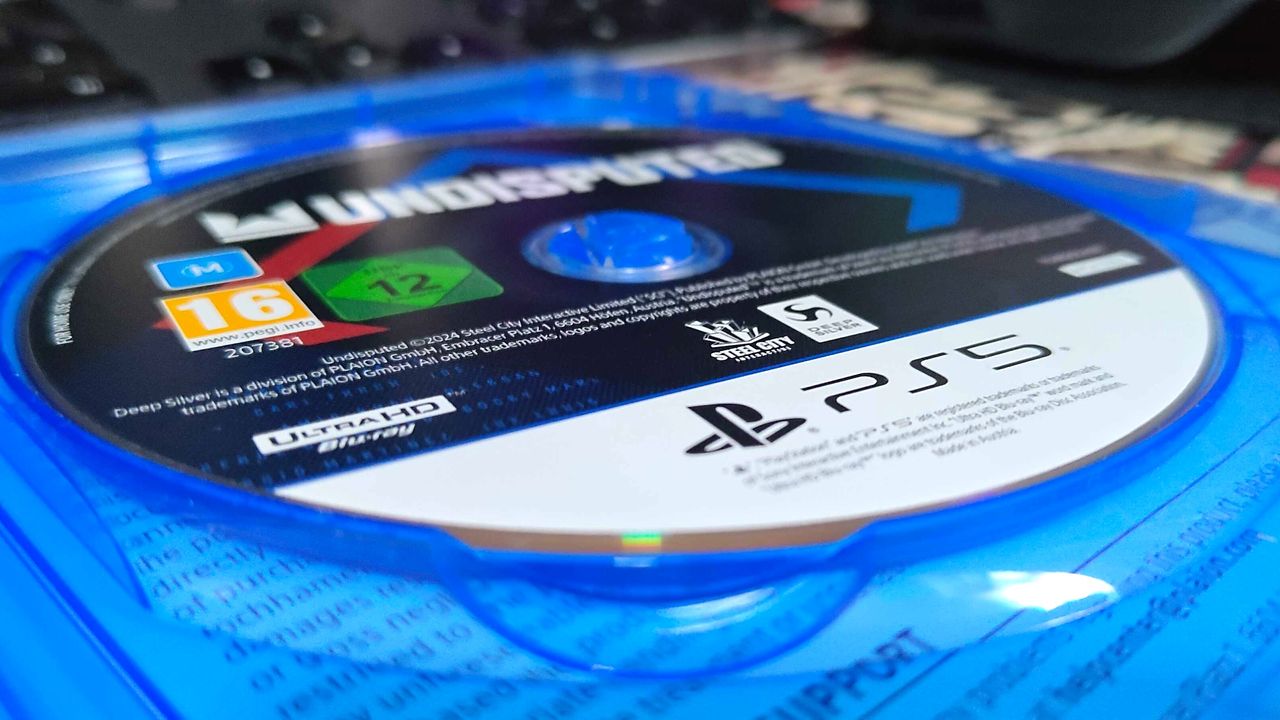
Sony denies claims it is stopping disc production — but admits its last plant will drop production by 10%
Sony corrected reports claiming its disc production would collapse by 90% The company's final disc plant will reduce output by 10% Sony still plans to stop producing new physical games in 2028 Sony has denied reports suggesting it plans to abandon physical disc manufacturing entirely, despite widesp
<![CDATA[ <article> <ul><li><strong>Sony corrected reports claiming its disc production would collapse by 90%</strong></li><li><strong>The company's final disc plant will reduce output by 10%</strong></li><li><strong>Sony still plans to stop producing new physical games in 2028</strong></li></ul><p>Sony has denied reports suggesting it plans to abandon physical disc manufacturing entirely, despite widespread speculation surrounding its future operations.</p><p>The company instead confirmed that its sole remaining disc-making plant will simply reduce output by 10%, not the previously reported 90%.</p><p>Sony DADC clarified the figure after earlier remarks caused considerable confusion among industry observers.</p><h2 id="clearing-up-a-misread-statement">Clearing up a misread statement</h2><p>“To clarify and avoid any misleading information: in that statement Dietmar anticipated an overall product volume decline by 10 percent, not a decline down to 10 percent,” said a Sony DADC spokesperson.</p><p>The correction arrived roughly two months after earlier reports claimed the plant was already being repurposed away from discs entirely.</p><p>Sony has consistently maintained that new physical game production will still end entirely in January 2028, despite this week's clarification.</p><p>The clarification means Sony's Thalgau plant will still operate at nearly full capacity beyond the original 2028 cutoff for releases.</p><p>Sony DADC did not respond to a separate fact-check request regarding whether all 300 plant employees face retraining toward alternative roles.</p><p>Reports from earlier this year suggested employees were being shifted away from discs toward microlens production at the same facility.</p><h2 id="discs-survive-but-ownership-questions-remain">Discs survive, but ownership questions remain</h2><p>Sony confirmed publishers may continue reordering existing disc-based games even after new physical production formally ceases in January of 2028.</p><p>PlayStation disc games already on shelves will remain available to buy for the foreseeable future.</p><p>This arrangement suggests the transition away from physical media will happen gradually rather than through an abrupt cutoff for publishers.</p><p>Even so, wider industry trends continue pointing toward digital distribution gradually replacing physical discs across most major platforms.</p><p>Several major publishers remain notably absent from Microsoft's own separate disc-to-digital initiative, raising questions about industry cooperation levels.</p><p>Sony recently argued in court that consumers cannot reasonably believe they truly own purchased games, since copies can exist simultaneously.</p><p>This legal stance, combined with the recent production clarification, still leaves genuine uncertainty around long-term disc availability for players worldwide.</p><p>Sony's carefully worded statement corrects one misunderstanding but does little to settle deeper doubts about ownership rights among consumers today.</p><p>Whether the Thalgau plant continues producing discs well beyond 2028 also remains unclear, given how quickly assumptions were proven wrong.</p><p>Consumers hoping for full clarity on Sony's long-term disc strategy will likely need to wait, since key details remain unconfirmed.</p><p>For now, the disc format appears to be shrinking gradually rather than disappearing suddenly, as many observers had initially feared.</p><p>Via <a href="https://www.theverge.com/games/991806/sony-disc-plant-90-percent-10-percent" target="_blank" rel="nofollow">The Verge</a></p><figure class="van-image-figure inline-layout" data-bordeaux-image-check ><div class='image-full-width-wrapper'><div class='image-widthsetter' style="max-width:676px;"><p class="vanilla-image-block" style="padding-top:31.51%;"><img id="diM9tpwF2Lz85R8q85CT78" name="tr-g_news" alt="Google logo on a black background next to text reading 'Click to follow TechRadar'" src="https://cdn.mos.cms.futurecdn.net/diM9tpwF2Lz85R8q85CT78.jpg" mos="" align="middle" fullscreen="" width="676" height="213" attribution="" endorsement="" class="inline"></p></div></div></figure> </article> ]]>
Read the full article on TechRadar
Read Full Article →